
The Hunter's Guide to Vacuum Sealing Game Meat in South Africa
6 April 2026 · 6 min read
You've done the hunt. Now comes the part that determines whether that blesbok backstrap is still exceptional in July, or becomes freezer-burned waste by March. Here's everything you need to know about processing and preserving game meat the right way.
Watch: LAVA for Hunters & Fishermen
In English — LAVA rated best-in-test for hunting and fishing applications
Why Does Game Meat Need Vacuum Sealing After a Hunt?
Wild game is not commercially processed meat. It has almost no fat marbling to protect the surface, it's been through stress hormones at the point of harvest, and it arrives at your cold room in irregular shapes and sizes. Standard freezer bags and cling wrap are completely inadequate for long-term game meat storage.
❌ Without vacuum sealing
- Freezer burn within 2–3 months
- Surface discolouration and texture loss
- Flavour loss from oxidation of game fat
- Moisture loss making lean meat dry and tough
- Cross-contamination risk from loose bags
✅ With LAVA vacuum sealing
- 2–3 years in the freezer with no quality loss
- Colour and texture preserved to day-1 quality
- No oxidation or rancid fat
- Moisture locked in — stays as juicy as fresh
- Clean, odour-free organisation in the freezer
How Do You Vacuum Seal Game Meat From Field to Freezer?
Cool the carcass completely
Never vacuum seal warm meat. Get the carcass into a cold room or on ice as quickly as possible after the hunt. The meat should be at or below 4°C before processing. Sealing warm meat traps residual heat and gases — it will look grey and puffy in the bag.
Hang for the right time
Most game meat benefits from 24–48 hours of hanging at 0–4°C before processing. This allows rigor mortis to resolve and enzymes to tenderise the meat. Kudu and eland benefit most from longer hanging (3–5 days). Impala and springbok can be processed after 24 hours.
Butcher into meal-sized portions
Think in meal sizes when cutting — 500g for two people, 1kg for four. Vacuum sealing makes perfect portioning easy. Once sealed and frozen, you won't want to defrost a 3kg roast when you only need 500g of strips.
Trim and surface-dry
Remove excess sinew, silver skin and damaged sections. Pat portions dry with paper towel — surface moisture reduces seal quality. If the meat has any blood pooling, blot it out. A dry surface gives you the cleanest vacuum and seal.
Seal with your LAVA machine
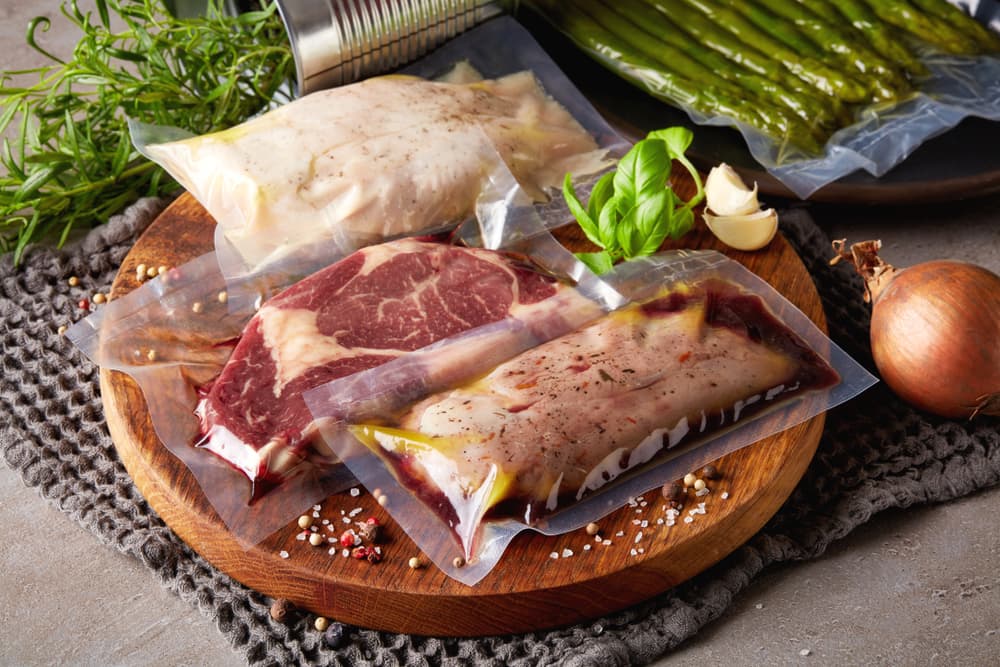
Use embossed vacuum bags — the channel pattern is essential for the pump to extract air evenly. For wet or moist cuts, use the Liquid Stop function. Seal mince in flat blocks for fast defrosting. Double-seal the bag for extra security on long-term freezer storage.
Label clearly and freeze flat
Write species, cut, weight and date on the bag before sealing (a marker on the bag works). Freeze flat first — once solid, stacked bags take up a fraction of the space of randomly-shaped packages.
How Should You Vacuum Seal Different Game Species in South Africa?
| Species | Carcass Size | Fridge Life | Vacuum Frozen | Notes |
|---|---|---|---|---|
| Blesbok | Medium | 3–5 days | 2–3 years | Excellent mild flavour. Minimal fat — seal quickly after processing. |
| Kudu | Large | 3–5 days | 2–3 years | Premium venison. Trim sinew from steaks before sealing. Backstrap is exceptional sous vide. |
| Impala | Small | 3–4 days | 2 years | Lean and tender. Ideal for vacuum marinating — takes 30 min vs overnight. |
| Springbok | Small | 3–4 days | 2 years | South Africa's finest. Very lean — seal whole fillets for sous vide cooking. |
| Warthog | Medium | 3–5 days | 2 years | Stronger flavour. Benefits from vacuum marinating with citrus/vinegar before cooking. |
| Wildebeest | Large | 3–5 days | 2–3 years | Coarser grain. Best diced for stews or minced. Trim fat before long-term storage. |
| Bushpig | Medium | 3–4 days | 18 months | Treat like pork. Seal fat-on roasts for braai prep; trim fat for long-term storage. |
| Eland | Large | 3–5 days | 2–3 years | Most beef-like of all venison. Vacuum-sealed eland rump rivals commercial beef easily. |
How Does Vacuum Marinating Improve Game Meat?
Game meat is lean and benefits enormously from marinating. But the traditional method — submerging in marinade overnight — is slow and uneven. Vacuum marinating reduces this to 20–30 minutes.
Here's how it works: when you vacuum seal meat in a bag with a marinade and apply vacuum pressure, the cells of the meat expand slightly as air is removed. When the vacuum releases, the marinade is forced into those cells. One cycle of this equals many hours of conventional marinating.
- Add impala or springbok loin to a bag with olive oil, rosemary, garlic and lemon
- Vacuum seal and leave for 20–30 minutes at room temperature
- Cook immediately — or refrigerate sealed for up to 12 days
Which LAVA Machine for Serious Hunters?
LAVA V.300 Premium
42 cm sealing width
Best for: Home hunter processing up to one or two animals per season
- Liquid Stop for wet cuts
- Pressure control for delicate items
- Works with jars and containers
- 2-year warranty
LAVA V.400 Premium
50 cm sealing width
Best for: Serious hunter, farmers market supplier, or multiple hunters sharing a machine
- Commercial-grade vacuum pump
- Faster cycle time
- 50 cm bags for large roasts and whole legs
- Stainless steel construction throughout
Pro Tip: Bag Size for Game Meat
For most game cuts, 20×30 cm bags are ideal for 500g–1kg portions. For whole rumps, large roasts or multiple chops, use 25×40 cm or 30×60 cm bags. LAVA vacuum rolls let you cut custom lengths — perfect for awkwardly-shaped game cuts. View our full range of bags and rolls →