
Vacuum Sealing & Load Shedding — How to Protect Your Food During Power Outages
10 April 2026 · 5 min read
South Africans spend an average of R2,400 per household on food waste every year. Load shedding makes it worse. Here's how vacuum sealing — combined with the right strategy — dramatically reduces the damage.
4–8 hrs
Typical freezer safe window during load shedding (if sealed and full)
3–5×
Longer shelf life of vacuum sealed food vs loose packaging
R2,400
Average SA household annual food waste — load shedding adds significantly more
What Actually Happens to Your Freezer During Load Shedding
A full freezer maintains safe temperatures for 24–48 hours without power — if you don't open the door. A half-full freezer stays safe for only 12–24 hours. Individual items — especially if loosely packed — deteriorate much faster.
The danger isn't just a single long outage. It's the cumulative effect of repeated load shedding cycles. Meat that partially defrosts and refreezes multiple times suffers significant quality loss — and in some cases, becomes a food safety risk.
The Danger Zone
Food safety guidelines state that perishable food should not be above 4°C for more than 2 hours cumulatively. If your freezer reaches 4°C or above during load shedding, proteins and dairy in unsealed packaging are at risk. Vacuum sealed food is more insulated, stays colder longer, and has a hermetic barrier preventing surface bacterial colonisation if partial thawing occurs.
Why Does Vacuum Sealed Food Survive Load Shedding Better?
Hermetic barrier against surface bacteria
If vacuum-sealed meat partially thaws, the sealed environment prevents bacteria from colonising the exposed surface. Loose meat in a bag has no such protection — the surface is exposed to any condensation or air that enters.
Better thermal insulation
Tightly vacuum-sealed portions contain no air gaps. Air is an insulator — removing it means the frozen mass acts as a single thermal unit, staying colder longer than loosely packed items.
Reduced moisture migration
Standard freezer packaging allows moisture to migrate — leading to ice crystals on the surface and within the food. Vacuum sealing contains all moisture, meaning that even if some thawing occurs, the food retains its structure and texture far better.
How Should South Africans Store Food for Load Shedding?
1. Bulk Buy & Vacuum Seal Immediately
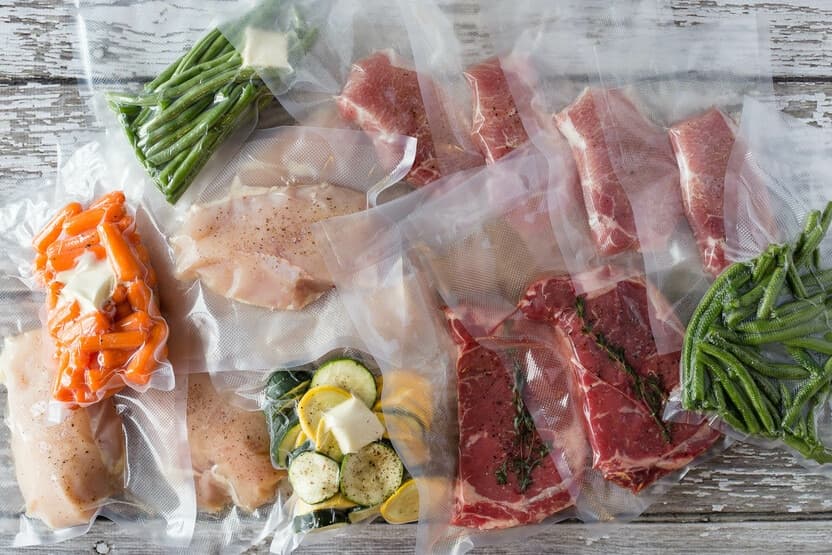
The cheapest and most practical load-shedding insurance is buying meat in bulk when prices are good and vacuum sealing the same day. A vacuum sealed 10 kg bag of braai chops, properly frozen, is essentially unaffected by a 4-stage load shedding cycle.
- Buy in bulk from your butcher on a Monday — seal and freeze the same day
- Portion into meal-sized packs before sealing — you'll defrost only what you need
- Keep the freezer as full as possible — a full freezer loses temperature more slowly
- If you have space issues: vacuum seal flat, stack vertically — takes up half the space of standard packaging
2. Know Your Schedule — Have a Plan
| Load Shedding Stage | Hours Off per Day | Freezer Risk (vacuum) | Freezer Risk (unsealed) |
|---|---|---|---|
| Stage 1–2 | 2–4 hrs | Low — stays well below 0°C | Low – Medium |
| Stage 3–4 | 4–8 hrs | Low — core temperature maintained | Medium — surface thawing risk |
| Stage 5–6 | 8–12+ hrs | Medium — monitor temperature | High — partial thawing likely |
| Extended outage 24+ hrs | 20+ hrs | Medium — refreeze quickly on restore | Very High — discard any questionable items |
3. Vacuum Seal Your Fridge Items Too
The fridge is more vulnerable to load shedding than the freezer — it loses temperature faster and the food is already at a higher temperature. Vacuum sealed fridge items stay safe for significantly longer:
- Cooked leftovers: 3–4 days unsealed vs 10–14 days vacuum sealed
- Cheese: 1–2 weeks unsealed vs 4–8 months vacuum sealed
- Raw meat (unfrozen): 3–5 days vs 10–14 days
- Prepped vegetables: 2–3 days vs 8–12 days
4. Pantry Strategy for Dry Goods
Load shedding also affects refrigerator-dependent pantry items like opened bags of rice, flour, nuts and coffee. Vacuum sealed dry goods need no refrigeration and are completely immune to load shedding:
- Coffee beans: sealed at room temperature 4–6 months vs 2–3 weeks open
- Rice/flour: 2–3 years vacuum sealed vs 6–12 months in original packaging
- Nuts: 2–3 years vacuum sealed vs 3–6 months in standard packaging
What LAVA Machine for Load Shedding Preparedness?
Any LAVA machine handles bulk sealing sessions well. But if you regularly process large quantities of meat — 10 kg+ at a time — you want a machine with a commercial- grade pump that won't overheat during extended sessions:
V.300 Premium X
Most PopularBest for most households. 42 cm seal width. Continuous home use.
View Machine →V.400 Premium
Heavy DutyFor serious bulk buyers. Commercial pump rated for extended sessions without rest cycles.
View Machine →In English — full buying guide to choosing the right LAVA machine